
By Carolina Bazan, Rights4Girls
I never fully understood what the “abuse to prison pipeline” meant until I witnessed it firsthand. Before joining Rights4Girls, I worked for nearly five years as a juvenile probation officer with the Maryland Department of Juvenile Services. My job was to supervise young people involved in the juvenile court system and ensure they complied with court-ordered conditions. One of my responsibilities was conducting social history investigations, which are extensive interviews with youth and their families to better understand their backgrounds, family dynamics, education, and life experiences. Those interviews and working directly with the youth changed me.
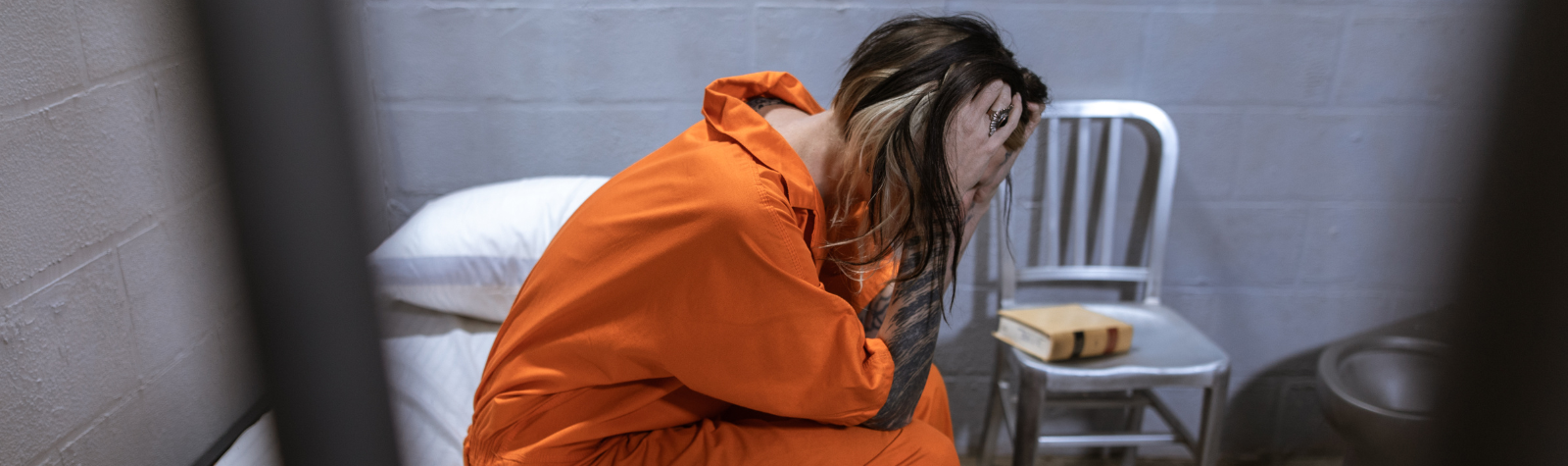
Again and again, I heard stories of childhood sexual abuse, domestic violence, neglect, family instability, trafficking, and profound trauma. These disclosures were not the exception; they were the norm. Yet despite knowing what these young people had survived, the youth legal system rarely treated their trauma as relevant to the outcome of their cases. Instead, it treated their trauma as criminal behavior.
The system I worked in was primarily punitive. Rather than asking, “What happened to you?” the question was almost always, “What did you do?” That distinction matters.
The girls I oversaw were rarely committed for serious or violent offenses. Many entered or remained in the youth justice system because they ran away from abusive foster/group homes, accumulated disciplinary infractions while in placement, missed school, or entered the system for low-level offenses such as alcohol or marijuana use or possession–often as a means of coping with trauma. If they violated probation by running away, missing curfew, or skipping school, they could be detained again, face a probation violation, and be pushed even deeper into the system. Looking back, many of those behaviors were not acts of delinquency, but rather basic survival instincts.
As I developed relationships with the youth, it became increasingly clear that they were just children responding to extraordinary unfortunate circumstances. Like any teenager and adult, they made mistakes. But unlike many of their peers, their mistakes were shaped by years of suffering violence, exploitation, neglect, and abuse. Too often, what the legal system labeled as “delinquent behavior” was actually a cry for help. Eventually, I realized I could no longer be part of a system that too often punished children for surviving abuse instead of addressing the conditions that caused it. I left the juvenile justice system because I believed lasting change had to happen through policy reform.
Now I have the privilege of working alongside survivor leaders who experienced this pipeline firsthand. Together, we are fighting to dismantle systems that continue to criminalize girls and youth instead of protect them.
Rights4Girls’ report, Criminalized Survivors: Today’s Abuse to Prison Pipeline for Girls, documents what many survivors have long known: girls involved in the justice system, (disproportionately girls of color), have extensive histories of violence and victimization. While Rights4Girls’ past studies document how experiences of running away, truancy, and sexual exploitation propel girls of color into the youth justice system for status offenses and prostitution-related crimes, Criminalized Survivors reveals how girls are pushed into the adult system for crimes of self-defense and forced criminality when they are coerced by their exploiters. Importantly, the abuse to prison pipeline cannot be understood without confronting the role of racism and adultification bias, as the report clearly states:
“Stereotypes of Black girls warp adults’ perception of them; they tend to view Black girls as young as 5-9 years old as more adult-like and more knowledgeable about sex than their white peers. In the context of sexual abuse, this adultification bias may translate into authorities’ dismissal of Black girls’ reports [of abuse]. In fact, one study showed that in some circumstances, ‘even 6-year-old Black girls are perceived as less credible (and perhaps more sexual) than 6-year-old white girls,’ and less traumatized by their victimization than white girls.”[1]
When Black girls are viewed as older, less innocent, or somehow complicit in their own exploitation, they are less likely to be believed, and less likely to be protected. As such, Black girls are overwhelmingly overrepresented in the juvenile justice system and disproportionately criminalized for behaviors that are often direct responses to abuse, trafficking, and other forms of violence. Disrupting the abuse to prison pipeline therefore requires confronting not only punitive laws and practices, but also the racial and gender biases that shape how adults perceive and respond to Black girls and youth of color. The abuse to prison pipeline still happens every day in the US.
We see it in cases like Tiffany Simpson. Tiffany was only 17 years old when she was arrested in Georgia for child sex trafficking, even though she herself had been a child sex trafficking victim for years. Her trafficker controlled her through violence, coercion, and manipulation, and used her to recruit another 13-year-old girl. When law enforcement intervened, the younger child was recognized as the victim. Tiffany was treated as the trafficker, even though she had been trafficked since she was 14 years old after enduring years of childhood abuse and instability. Despite federal law recognizing children under the age of 18 in the commercial sex trade as victims, Tiffany was tried as an adult while seven months pregnant and sentenced to 30 years in prison, with 20 years to serve. Her own victimization as a sex trafficking victim was never meaningfully considered in accessing her own culpability.
Her story illustrates one of the most devastating realities survivors face: being prosecuted for acts they were forced or coerced to commit. The same pattern appears in other high-profile victim-defendant cases.
Chrystul Kizer was 17 years old when she killed the man who had trafficked and repeatedly sexually abused her. Her trafficker was already known to law enforcement for exploiting numerous young Black girls, yet he remained free. Instead of being protected, Chrystul faced homicide charges after acting in self-defense.
Pieper Lewis was just 15 years old when she was sold to a 38-year-old sex buyer who drugged and repeatedly raped her over several days. In desperation and in self-defense, she killed him in order to escape. Rights4Girls served as an expert witness during her trial, explaining how her actions were inseparable from the abuse she endured as a child sex trafficking victim and foster youth. Although the judge initially suspended Pieper’s sentence and placed her on probation, she later ran away from her placement due to her feeling unsafe in that setting. That probation violation ultimately resulted in the reinstatement of her original 20-year sentence.
These are not isolated tragedies. They reveal a justice system that often fails to recognize the signs of trafficking, which include trauma and coercion. Too frequently, girls who have already experienced unimaginable violence encounter another form of retraumatization and harm when they enter the legal system. If we are serious about ending the abuse to prison pipeline, we cannot wait until a child enters the courtroom. We must invest in preventing child sexual abuse, trafficking, and family violence before exploitation occurs. We must ensure that schools, hospitals, child welfare agencies, and law enforcement are trained to identify trauma rather than punish it. We must expand trauma-informed services instead of relying on punitive measures such as detention. And we must enact policies that recognize affirmative defenses, vacatur laws, and protections for survivors who are criminalized because of their abuse or exploitation.
Most importantly, accountability must be directed where it belongs. Not toward children trying to survive, but toward the adults who abuse, exploit, traffic, and profit from them.
Until we shift our response from punishment to protection, the abuse to prison pipeline will continue to criminalize survivors instead of helping them heal.
Citations
[1] Yasmin Vafa & Rebecca Epstein, Criminalized Survivors: Today’s Abuse to Prison Pipeline for Girls (2023).