

By Kimberly Korrin, Detective (Ret.)
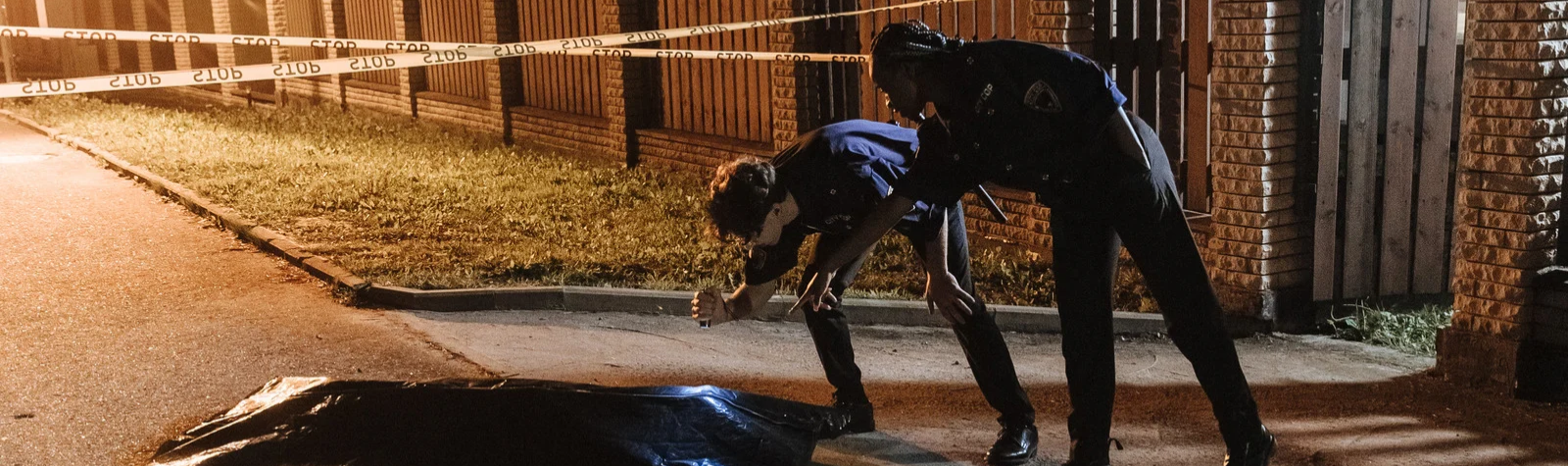
If I asked you to accompany me to the scene of a suspicious death, you’d likely already have a running task list in your head. Photographs will be taken. Physical and electronic evidence will be identified and collected. Witnesses with knowledge of events before, during, and after the death will be interviewed, and more. We expect these investigative steps, even when there is no known suspect or anyone who witnessed the crime.
Now, let’s change the scenario.
You’re responding to a domestic violence call. Suddenly, our thoughts shift to the people involved. What if she doesn’t want to tell us what happened? What if he has already left? What if their accounts conflict? What if she changes her story? How do we get past the proverbial “he said, she said”?
Why does our investigative mindset change simply because the people involved share an intimate relationship?
We investigate homicides without the benefit of a speaking victim. Why should the reluctance or inability to participate of a living survivor determine the thoroughness of a domestic violence investigation?
The Scene Is Still a Potential Crime Scene
What happens, or doesn’t happen, during the initial response to a domestic violence call can shape the entire investigation. Yet too often, our attention becomes so focused on the people and their statements that we overlook the scene itself.
A domestic violence scene holds evidence just as any other scene does, sometimes more. There may be physical evidence of violence, damaged property, electronic communications, signs of a disturbance, or witnesses who can provide critical context. Some evidence corroborates what has been reported. Other evidence may challenge an account or reveal information no one has disclosed.
And sometimes, the most important evidence isn’t evidence of a single criminal act, but evidence that helps us understand the circumstances surrounding it. Domestic violence is often about patterns of behaviors, so we have to look beyond single incidents.
A broken phone may be more than damaged property. It may represent interference with a survivor’s ability to summon help. Disturbed bedding, torn clothing, or damaged personal belongings may provide insight into what occurred. Text messages may reveal threats, intimidation, or attempts to leave the relationship. A neighbor who didn’t witness an assault may have heard threats, observed escalating behavior, or recognized that something was different that night.
Individually, these details may seem insignificant. Collectively, they can provide context, corroborate or challenge accounts, and reveal patterns of behavior that would otherwise remain unseen.
Evidence doesn’t have to speak directly to the criminal act to have investigative value.
Looking Beyond the Disclosure
One of the greatest missed opportunities in domestic violence investigations is our reliance on verbal disclosures. Interviews provide one source of information and should not be the entirety of the investigation.
We routinely use circumstantial evidence, fragmented timelines, indirect witnesses, and physical evidence to investigate other crimes. We recognize that no single piece of evidence must tell the entire story. Instead, we look at how the pieces fit together, where they support one another, and where they don’t.
Domestic violence investigations deserve that same approach.
Consider how much information may be lost when an investigator photographs an injury but never examines the surrounding environment. Or when an officer documents a survivor’s reluctance to participate but never contacts the person who called 911. Or when the investigation ends with conflicting statements, despite the potential existence of electronic evidence, witnesses, or physical evidence that could help establish what happened.
The absence of a verbal disclosure does not mean the absence of evidence.
And the presence of a verbal disclosure should not mean we stop looking for it.
Thorough Is as Thorough Does
Our responsibility as investigators extends well beyond establishing probable cause for an arrest. Probable cause may justify an arrest, but it should never become the finish line for an investigation.
We should approach every scene with the same investigative curiosity and commitment to uncovering the facts, not to merely support what we believe happened, but to thoroughly examine the circumstances, corroborate or challenge accounts, and allow the evidence to guide our conclusions.
When the conclusion is a criminal act occurred, our ultimate standard requires proof beyond a reasonable doubt. Proof that a person, on or about a particular date, at a particular location, committed a criminal offense.
Much of our attention is understandably focused on evidence of the criminal act itself. But what about evidence establishing the relationship between the parties or placing the accused at the scene, particularly when they’ve fled before officers arrive?
We often take these for granted because the parties know each other, but can the case still be proven if the victim doesn’t participate to identify the perpetrator or the relationship at trial?
The relationship between the parties may affect how an offense is charged, whether penalty enhancements apply, the availability of certain protective orders, or other legal provisions specific to domestic violence.
A photograph, video, witness account, electronic communication, or seemingly insignificant detail may help establish facts that become essential to proving the elements even with the absence of a participating victim.
And that value extends far beyond conviction.
Evidence matters at every stage of the criminal justice process. It informs probable cause determinations, supports assessments of guilt or innocence, provides context for decisions about pretrial release and protective conditions, and may ultimately inform sentencing and punishment. We must investigate through each of these lenses.
In domestic violence cases, evidence of fear, intimidation, coercive control, escalating violence, and patterns of behavior may provide critical context that a single incident cannot. These details can help decision-makers understand not only what occurred, but the circumstances surrounding the offense and the potential danger that remains.
When we overlook or fail to document this evidence, we aren’t simply weakening a potential prosecution. We are limiting the information available to everyone who will make decisions about that case. We may also be inadvertently contributing to the potential danger for that survivor.
The value of evidence is not determined by whether it results in an arrest or conviction. Its value lies in the truth and context it can provide.
They Owe Us Nothing. We Owe Them Our Best Efforts.
Too often, a survivor’s willingness to participate becomes confused with the strength of a case. An investigation stalls because a survivor is labeled “uncooperative,” even though the scene, witnesses, and other sources of evidence have not been fully explored.
No one asks to become part of the criminal legal system. When police are summoned to a domestic violence event, the immediate goal may simply be to make the violence stop. There are countless reasons a survivor may be reluctant to disclose information or participate in prosecution. It is not our job to judge those decisions.
It is our job to investigate.
A living victim or their ability to participate should not diminish the quality of an investigation.
We only get one opportunity to document a fresh scene. Evidence that is overlooked, unrecognized, or left behind may never be recovered.
The evidence may not always be there. But we cannot know what exists if we never look.
Improving domestic violence investigations begins with changing how we see them. We should not view them as relationship disputes dependent on competing accounts, but as criminal investigations deserving the same curiosity, diligence, and thoroughness we bring to any other scene.
The relationship between the people involved should never determine the quality of our investigative efforts.
The evidence is often there.
The question is whether we’re willing to look for it.