

By Joy Farrow, Ret. Deputy Sheriff
As a retired law enforcement officer, here’s what went through my mind about Bryan Kohberger: Why that house? Why pick those women? Why barge into a home full of people instead of picking someone alone?
Because Kohberger wasn’t looking for an easy kill. He was looking for a performance. And that’s what rattled me. This is almost unheard of for a first-time murderer. This guy wasn’t sloppy (aka disorganized killer.) It wasn’t a crime of passion (he wasn’t a jilted lover.) It wasn’t his “breaking point.”
The murders were calculated, rehearsed, and executed with a level of planning that most first-time killers never come close to. Historically, at any rate. Which is exactly the point—this didn’t feel like a first-time kill.
He Didn’t Snap—He Stalked.
Kohberger surveilled that house at least 23 times before the murders. Not once. Not twice. Twenty-three.
He bought a military-grade knife. He wore a face mask. He turned his phone off when approaching the scene. The house wasn’t isolated. The women weren’t alone. It was a multi-story house with multiple entrances. It wasn’t a random crime of opportunity, and to be repetitive because this is so important: this is not the historical work of a rookie killer.
Law enforcement saw a man in control. This guy used his criminology education as camouflage. And, like so many predators, had two faces—professor’s pet by day, predator by night. And like many criminals, he didn’t escalate out of control, he escalated with control.
He didn’t react. He choreographed it.
Here’s Why This Case Is Different
We in law enforcement don’t see someone go from “nothing” to this. He didn’t sneak up on one vulnerable woman walking home alone. He entered a multi-level, multi-resident home, in the middle of the night, knowing full well there were a number of people inside. That’s not opportunistic. In other words, he was grandstanding.
He wanted to dominate the scene. He wanted the challenge. Worst of all, he actually pulled it off.
But best of all, he didn’t get away.
How Law Enforcement Caught Him
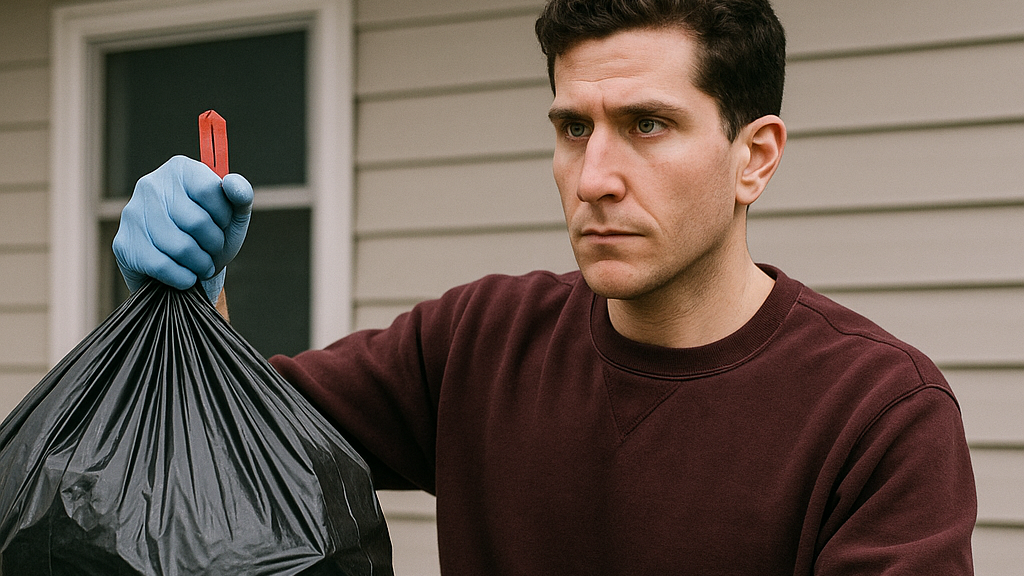
A massive multi-jurisdictional task force was immediately established, including the FBI to track down the killer. From video in the area to cell phone tower pings and everything in between. It was quickly established that a white Hyundai was spotted numerous times over the course of June through November 2022. The FBI quickly pieced a suspect together: Kohberger, a University teaching assistant. They put him under a surveillance microscope, and watched his every move. They established that he left the university after the murders, driving his father home to Pennsylvania for the holidays. They watched him wearing surgical gloves taking garbage out of his parent’s house, and hiding it in the neighbor’s garbage. They finally made a blitz arrest with a SWAT team into his parent’s house, in the wee hours (appropriately, just like he did when he committed the murders), catching him in the kitchen with surgical gloves on, bagging up garbage into ziplock bags.
The College House Wasn’t Random: It Was a Message.
The house had a reputation: it was a party house. Not sketchy. Not isolated. A place where young women felt safe. And that’s exactly why he picked it. It wasn’t just about killing: It was about destroying safety. Making sure that no one felt safe again—not even in their own beds.
The University Saw Smoke—But Didn’t Call Fire.
Between August and November 2022, women at the university reported that Kohberger made them deeply uncomfortable. He was reportedly rude and condescending to female students, followed them to their cars, graded them poorly compared to male students, and creeped them out—badly.
Like many college administrations, the women’s complaints were dismissed or minimized.
Despite their complaints, the school put him on a performance plan—on November 2. He was in a follow-up meeting on November 12. He committed the murders in the early hours of November 13.
So, in other words: Kohlberger was already unraveling by the time the university got around to address him. And the systems meant to catch that unraveling… as usual, they were politely documenting it in lieu of taking action to address the complaints against him. How much documentation and students complaining does it take. One? Ten? Fifty? It definitely wasn’t the old “He said, she said.”
He Didn’t Panic. He Posed.
Then, after the murders, he returned to school. Taught his classes. Graded papers. He completed the semester. He even called his father—multiple times—within hours of the killings. One call lasted nearly an hour. This wasn’t emotional collapse. It was narrative control.
Looked Like a Graduate Student. Thought Like a Killer.
To be clear: predators don’t always look like monsters. Sometimes, they actually look like achievement. People thought that “he finally turned his life around.” Kohberger was the epitome of a reformed addict, attending classes, “cleaning up his act.” But he had an agenda: the criminology classes were actually personal research and “his turn-around story” was the perfect cover. Who doesn’t love a good come back story?
We confuse progress with safety all the time. And that’s how predators slip through the cracks. When you reward appearance over behavior—resume over risk—you get systemic blindness. Which, even in 2025, we still have – in spades.
We Need to Stop Hoping—and Start Acting.
I’ve worked in law enforcement long enough to know that violence rarely begins with violence. It begins with how someone thinks.
When someone shows:
- A lack of empathy
- Contempt for women
- Obsession with control
- Isolation combined with intellectual superiority
…we need to stop making excuses.
Don’t explain it away. Don’t say “he’s under stress.” Don’t wait for it to become news.
Because people shouldn’t have to die for someone, anyone to finally pay attention.
The Bottom Line:
Although he confessed to avoid capital punishment, Bryan Kohberger has yet to confess to a motive. And although he will have the opportunity to speak in court, he isn’t expected to comment.
But based on the evidence, he didn’t just want to kill. Like almost all serial killers, he wanted to command the scene. He wanted to send the message that he was smarter than everyone else (Pro Tip: They ALL think that.) He wanted to prove he was smarter than the system. And in some ways, he nearly did—because even fifty years after Bundy, the system still doesn’t want to believe someone like him could do something like this.
Because predators don’t care what we believe. They actually count on it.